
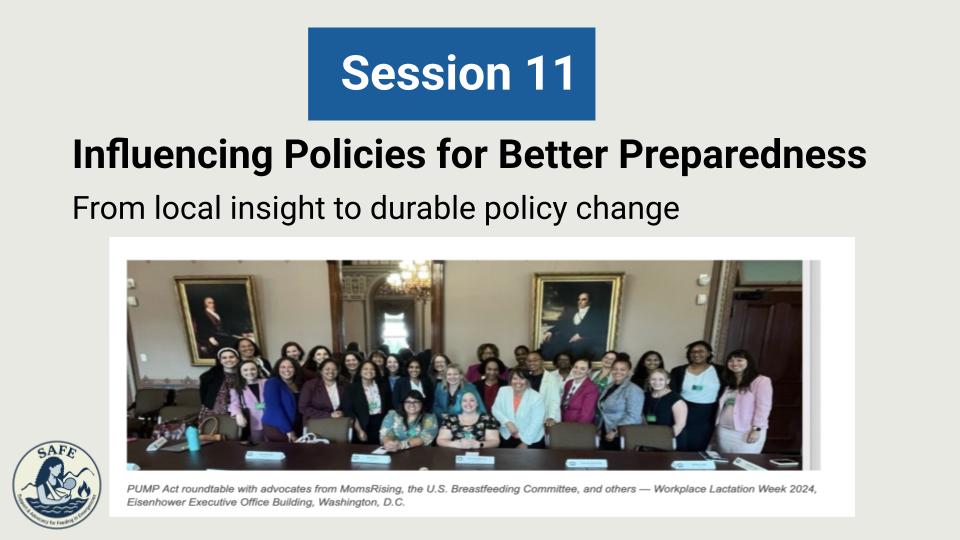
Session 11 – Homework
<< Back to main Session 11 page
Here is the whole assignment, step by step. Jump straight to any step below, or download the identical material as a printable handout.
1. Bookmark Handout & Resource Websites
Throughout the Nourishing Resilience series, you have received many handouts and resources, and there are many more that exist. You don’t need to keep track of all of them – just bookmark a few sites, unless you want to save some essential docs locally in case of no internet (recommended).
- Nourishing Resilience Training main page (North America focus)
https://safeinfantfeeding.org/trainings/nourishing_resilience_virtual/
(You can also search for resources using the search box in the right sidebar) - IYCF-E Core Group (International Focus)
www.ennonline.net/about/infant-and-young-child-feeding-emergencies-iycf-e-resources
Remember –
You can always revisit the recordings of this training series, or reach out to us at 828-809-3301 or safe@infantfeeding.org to discuss your training & support needs.
2. Consider Your Policy Advocacy Path
Remember, as Tina Sherman said: “Your goal is not to lead emergency response, your goal is to ensure infant feeding is part of it.”
Consider both the highest needs in your area and what you feel comfortable doing. You can:
- Connect partners across systems
- Contribute subject matter expertise
- Center the voices of families
Questions to ask yourself to help determine action steps:
- What relationship(s) can I build?
- What gap can I help close?
- What conversation can I start?
If you are not sure what to do or want additional support, stay in touch with the SAFE Team through the S3C Meetings or USBC IYCF-E Constellation (links later).
MomsRising is a great source of information.
You can learn more about Mom’s Rising, get education on family-related policy issues, or join their advocacy newsletter at https://www.momsrising.org/
3. Decide On Your Next Steps
When deciding on next steps, there are multiple categories to consider in addition to policy (previous item), including: personal readiness, IYCF-E response support, and local preparedness.
Personal Readiness:
- What habits do you want to implement to help you be ready to help respond to support babies and families when an emergency arises?
- What habits do you want to implement to help your family be ready for an emergency?
IYCF-E Response Support:
- How would you ensure you have access to some clean water in an emergency?
- Consider keeping plain (“regular”) bleach and some black permanent markers on hand. Watch bleach expiration date.
- Periodically practice the RNA so you are ready to use it when needed.
- See also other planning docs and resources!
Local Preparedness:
- How much time can you commit?
- Are you connected with your local and state:
- Champions — Who has already stepped up for this work?
- Partners — Diaper banks, housing authorities, other organizations local families trust.
- Emergency managers & responders — The ones who hold general emergency preparedness in every community.
- Plan for connecting and follow-up.
- What is the best way for you to stay connected? Email, phone calls, attending regular meetings, etc?
- Can you spend some time once every 3 months to reconnect by phone/email? Once a year in person? Consider getting involved in emergency planning meetings and exercises that are open to the public.
- What do they need? Do they need support, information, volunteers, or something else? Can you feed them when there is an emergency?
4. Complete the Evaluation

To track your attendance and help us improve, please complete the short evaluation as soon as possible. This will allow us to verify your attendance for the certificate of completion at the end of the series. https://forms.gle/VeeMBUYYdXYzVJsXA
4. Connect to at Least One Ongoing Support Resource
While we have done our best to make the Nourishing Resilience series comprehensive, emergency preparedness and policy work can be challenging. We all need support, even the SAFE Team.
We encourage you to stay connected with us and others doing this work using one or more of the methods below.
Handouts, Links & Resources

Ongoing IYCF-E Advocate Group – Planning Survey
Many Nourishing Resilience participants have requested an ongoing asynchronous group for discussion and mutual support. To try to select a platform that fits as many interested people as possible, please respond to this short survey hosted on Google forms.

USBC IYCF-E Constellation is Re-Emerging
Currently open to USBC member organizations.
Sponsored by USBC
Reach out to office@usbreastfeeding.org to express interest.
Organizing session tentative time – Wed. Oct. 14, time TBD

SAFE Support and Strategic Core Meetings
Ongoing IYCF-E preparation & implementation support.
This quarterly support & strategy meeting for current & former SAFE training participants invites attendees to bring wins and challenges from their own efforts to implement policies and practices in their local area.
Meetings typically include updates from both the SAFE Team and participants, discussion on topics of interest, and breakouts for small group discussion, sharing of expertise, and brainstorming.
Want or Need Additional Support?
We Can Help!
SAFE Team Services Include:
- Technical support & capacity building
- Policy guidance
- S3C Virtual Support Sessions for IYCF-E advocates.
- Custom training programs for organizations
- Tabletop exercises to practice IYCF-E & pregnancy
- Emergency response guidance
Reach out to us at info@safeinfantfeeding.org or 828-809-3301 or visit our services page.

Keep going with us. The SAFE Support and Strategic Core meets quarterly as a free mastermind for people putting IYCF-E into practice — shared problem-solving, peer support, and updates from the team. See the dates and register.
Please Support Our Efforts
If you find this training helpful, please support our efforts with a financial donation. Click below and select “SAFE Team” to earmark for IYCF-E education and disaster response support.
Thanks to our sponsors
This work is free because these people and organizations paid for it.

Marcia Brady Tucker Foundation
A private family foundation dedicated to supporting charitable organizations that align with its mission of giving back. Grants are made only as a result of the Foundation’s own initiative.
Breastfeeding Family Friendly Communities
Provides technical assistance to breastfeeding coalitions and health departments across the US, using the Ten Steps to a Breastfeeding Family Friendly Community. The SAFE Team is a project of BFFC.

In memory of Elsie Perry
Elsie Perry was a founding mother of La Leche League Boston in the 1960s. A gift made in her memory by her daughters funded an eleventh month of this training series.

BabyBjörn
Founded in 1961 and still family-owned, with a mission to make everyday life easier for parents with babies. If your community needs emergency baby gear, reach them at care@babybjorn.com.

Confident Pregnancy
Helps people be healthier, feel more confident, and find their inner strength. Tips for staying calmer and more resilient under stress at MelindaDelisle.substack.com. DBA Melinda Delisle Innovations.

Birthstone Center for Appalachian Perinatal Resilience
Strengthens perinatal health in Western North Carolina by centering families, uplifting birthworkers, and advancing equitable access to lactation, doula and maternal mental health support.
Sponsor this IYCF-E training
Interested in sponsoring or partnering with us? Get in touch.

Scan to open this page on your phone