
An arctic blast had come down the mountains, the kind of cold that North Carolina does not really have the vocabulary for. Wind that went through a coat like it was not there. Temperatures in the twenties at midday and falling hard after dark. Pipes bursting in houses that still had pipes. And in the sheds and fellowship halls where donated formula was stored, the cans themselves were freezing, because nobody builds a disaster supply chain for babies, so nobody had thought to keep their food warm.
Up in the campers and the half-repaired houses, families were doing a kind of math no parent should ever have to do. How much propane is left. Which room can we keep warm. If the heater runs for the baby’s sake, what runs out first. A newborn cannot shiver. A newborn just gets quiet, and quiet is the emergency. That week, heat was not comfort. Heat was infant feeding, because a bottle means water, and water means warming, and a mother cannot nurse well in a camper she cannot feel her hands in.
Cold like that does not pause the need. It concentrates it. So when BeLoved, one of the community organizations our team worked beside all winter, ran a drive-up distribution of heaters and propane, our people went and worked the car line.
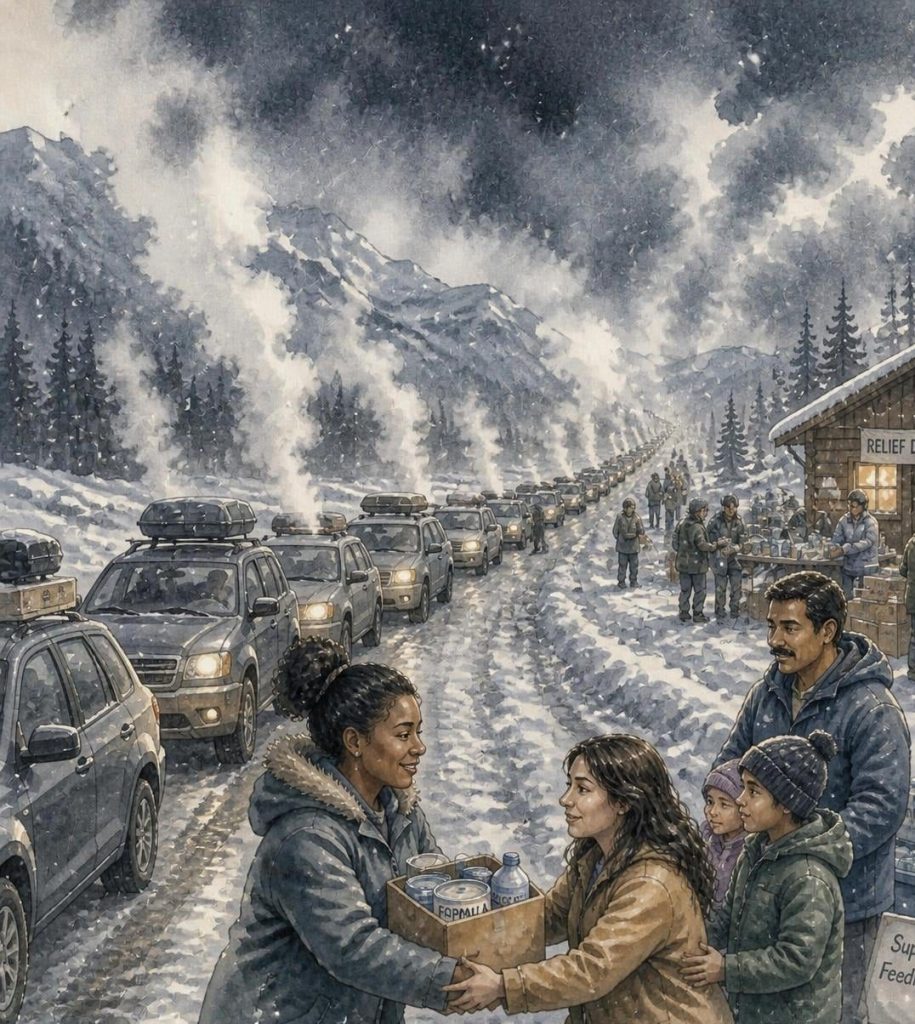
Picture it at noon. A line of cars idling in the wind, exhaust clouding around the bumpers, and in so many of the back seats, a baby. The team walking the line, hood to hood, window to window. An infant feeding sanitation kit passed through a rolled-down glass. And then the conversation, held out in the open cold, because the rule our coordinators drilled into everyone was that we are not a delivery service. We do not drop and drive. We are there to be with the family. So the volunteers stood in the wind and asked, car by car: How old is the baby. How are you feeding. Do you have clean water where you are staying. Is there heat where the baby sleeps.
When a family with a three-month-old came through, the team handed in ready-to-feed formula, the kind that needs no water at all, and stayed at the window, engine running so the baby stayed warm, to explain gently why, on a day like this, in a place like this, it was safer than powder. Life-and-death chemistry, taught in thirty seconds, through a car window, in the wind.
There is a piece of paper from that morning that I have kept. It is the route sheet, the plain daily document our coordinator Melinda built to tell the teams where to go and what to carry. Between the site addresses and the kit counts, she had typed one more instruction: Dress warmly, take breaks to warm up. She knew exactly who she was writing it for. People who would stand in an arctic wind for hours and forget they were cold, because there was a line of babies to get through.
That is the picture I want you to keep. Care running in every direction at once. Families in the cars, caring for their babies through a winter with no infrastructure. Volunteers at the windows, caring for the families. A coordinator, before dawn, caring for the volunteers in a typed sentence. Nobody did anything historic that day. But if you want to know what infant feeding in emergencies actually means, it is not a policy paper. It is a woman in her warmest coat, leaning into the wind at a stranger’s car window, asking how the baby is eating, and staying to hear the answer.
Voices from the Storm
Previous: 4. Building the Plane While Flying It
Next: 6. The Day It Wasn’t a Ten-Day Project
See all twenty-five pieces