If your state plan is one of the ones reviewed here, this is the evidence to hand your planner, and it is peer reviewed rather than advocacy. The finding that matters for you is not that infant feeding is absent, it is that where it appears it is usually formula logistics only, with nothing on protecting breastfeeding, safe preparation or donation management. See Emergency Management and Preparedness Coordinators.
“It Validates Our Experience in Sciency Words”
In July, a link landed in the SAFE Team’s chat with four words from Norma Escobar, SAFE Team Clinical Director: “Hot off the press.” Within minutes, the reactions were pouring in — because a research team at Johns Hopkins, led by anthropologist and breastfeeding scholar Cecília Tomori, has just published the first peer-reviewed assessment of how well U.S. states have built infant and young child feeding in emergencies (IYCF-E) into their disaster planning. The study, published this July in the International Journal of Disaster Risk Reduction, is open access, which means every emergency manager, health director, and policymaker in the country can read it for free.
The short version: states mostly haven’t incorporated infant feeding into emergency preparedness at all. No one on this team was surprised — which is exactly why the paper landed the way it did.
Sooo good!! It validates our experience in sciency words.— Norma Escobar, SAFE Team Clinical Director
What the researchers did
The team examined publicly available emergency planning materials from all fifty states — the Emergency Operations Plans (EOPs) maintained by state emergency management agencies, plus guidance published by state health departments and WIC programs. They scored everything against established global standards: the World Breastfeeding Trends Initiative (WBTi) assessment derived from the Operational Guidance on Infant Feeding in Emergencies (OG-IFE), the international benchmark that defines what real IYCF-E preparedness looks like — breastfeeding protection and support, safe formula preparation, trained staff, coordination, and management of formula donations.
What they found
The mean state score against global standards was zero. Not low. Zero. No state fulfilled more than a single criterion. Of the 46 state Emergency Operations Plans the researchers could obtain, only 12 mentioned infant feeding in any capacity — often just a single sentence about acquiring formula. Not one plan in the country included operational guidance on breastfeeding support, safe formula preparation, coordination of infant feeding services, or donation management. Only four of the 46 plans contained any variation of the word “breastfeed.” Seventeen contained “infant,” nine contained “baby,” and eleven contained “formula.”
Four numbers from the study are worth carrying into any conversation with a planner. Thirty four of the 46 plans, 74 percent, do not mention infant feeding at all. Across every state emergency operations plan in the country, the word “infant” appears 40 times. No state has a donation management plan for infant feeding, and no state has a plan for supporting formula-dependent families. Only five states explain how a family reaches skilled lactation support during a disaster. The average state fully met none of the eleven basic elements and partially met one and a half.
The donation finding is the one we keep coming back to. We publish a position on donations and a rule for donated human milk because we watched what happens without them. The study says no state in the country has either.
Eleven states actually included information that is not evidence-based — for example, telling families to pack formula in their emergency kits with no mention of the clean water, heat, and sanitized equipment that powdered formula requires to be safe. As the authors put it, that kind of advice can give families “a false sense of preparedness” while leaving formula-fed infants at real risk when water and power fail.
Pets are planned for. Babies are not.
The finding that lit up our team chat was the comparison the researchers drew between infant planning and animal planning. In Florida and Michigan — the two states with the most infant-feeding references — pets and animals appeared in emergency plans far more often than babies did:
Florida’s EOP referenced “pet” 12 times and “animal” 54 times, while Michigan’s EOP referenced “pet” 21 times and “animal” 179 times. In comparison, Florida’s and Michigan’s EOPs mentioned “infant” or “baby” 9 and 8 times, respectively… many EOPs included dedicated annexes or operational sections addressing animal sheltering and support services. Comparable structured planning for infant feeding was not observed.— Pewitt et al., 2026
I saw that animal/pet data and that is such good quantifiable data to have.
— Rachel Fann, SAFE Team
To be clear: we love that pets are planned for. Animal sheltering annexes exist because advocates fought for them after Hurricane Katrina, and they save lives. But they also prove that emergency management systems can build detailed, operational planning for a vulnerable population when the will exists. Babies deserve at least as much care and planning as do pets.
This supports our observations as well. Pets are more planned for than infants.
— Ashley Mickelson, SAFE Team
The sentence that hits the nail on the head
For those of us who have spent years trying to get infant feeding into the rooms where disaster response is actually coordinated, one passage of this study reads like our own field notes:
Taken together, these findings suggest that infant feeding is treated as a public information issue rather than an operational component of disaster response planning. As a result, guidance may exist for families and providers, but it is rarely embedded within the systems responsible for coordinating resource allocation and mass care operations. — Pewitt et al., 2026
This is exactly the gap the SAFE Team works in. A brochure on a health department website does not feed a baby in a shelter. What feeds a baby in a shelter is a plan: trained staff, a designated lead, a lactation support roster, safe formula protocols, and a donation management system — all written down and exercised before the storm has a name.
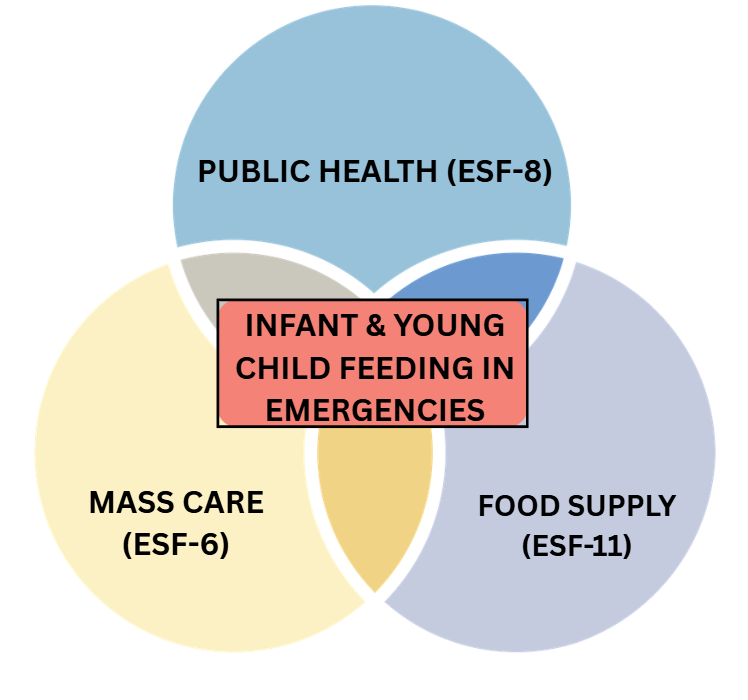
The study also names why the gap persists. Federal doctrine splits responsibility for infant feeding across three different Emergency Support Functions — mass care under ESF-6, public health under ESF-8, and food supply under ESF-11 — and, in the authors’ words, “without explicit mechanisms of coordination across these functions, infant feeding may occupy an ambiguous space within governance.” When something is everyone’s job on paper, it is no one’s job in the EOP and this was something that we observed first-hand in the response following Hurricane Helene.
The bright spots — and one is right next door
The study is not all gaps. State WIC programs emerged as the strongest existing resource for infant feeding in emergencies: WIC agencies produced the most comprehensive public-facing guidance the researchers found anywhere, with Alabama and Nevada highlighted as case studies. Yet WIC has no formal role in emergency response structures — a mismatch the authors flag as one of the biggest missed opportunities in American disaster policy.
And the single strongest operational example in the entire country? South Carolina — our neighbor. Its Department of Public Health emergency plan includes a dedicated appendix on lactation and infant feeding: shelter breastfeeding procedures, staff training requirements, a regional on-call rotation of IBCLCs, a lactation screening flowsheet, and structured procedures for acquiring formula and baby food through the state resource system. It was the only state to earn a full point on any global criterion, on the measure covering protection, promotion and support of appropriate feeding practices. The appendix is numbered 14, “Access to Lactation Consultants and Infant Formula/Food,” and it covers both general population and medical needs shelters. It includes virtual consultation protocols, breastfeeding friendly shelter space and privacy, guidance for parents who are exclusively pumping and need electricity, and escalation paths through the state resource system, ESF-6 and ESF-11, to food banks and to mission requests to FEMA for Infant and Toddler kits. Proof that a state does not have to wait for Washington — the authors say this directly: “even in the absence of federal requirements, state agencies can and should take action.”
One detail matters if you want to copy it. That appendix sits in a Department of Public Health plan, not in the state’s primary emergency management plan. The model came out of public health, not out of emergency management, which is worth knowing before you decide whose desk to take it to.
Alabama shows the same lesson from the other side. Its WIC program offers an emergency infant feeding resource covering relactation, combination feeding and maintaining supply under stress, and the state scored eight of the eleven basic elements. Its formal emergency operations plan contains no reference to infants at all. Good guidance existing in the wrong document is still a gap. Nevada also scored eight, with a WIC resource guide built as a curated directory of outside material rather than original state guidance.
What this means for our work
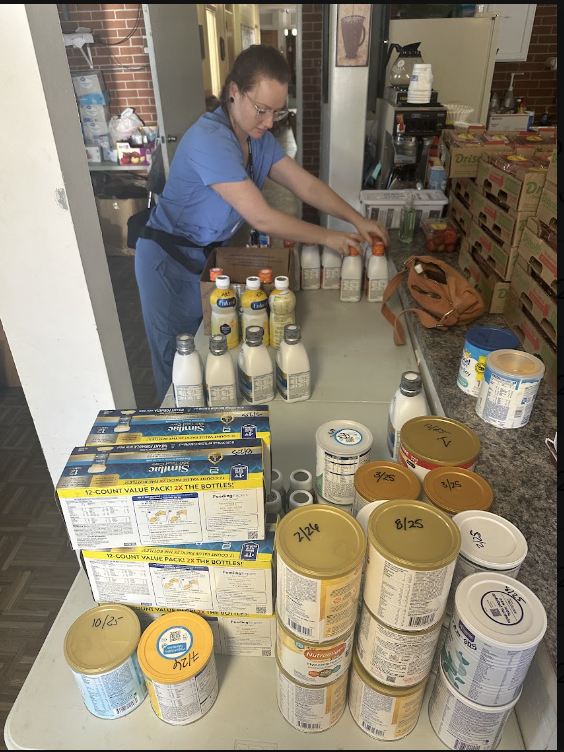
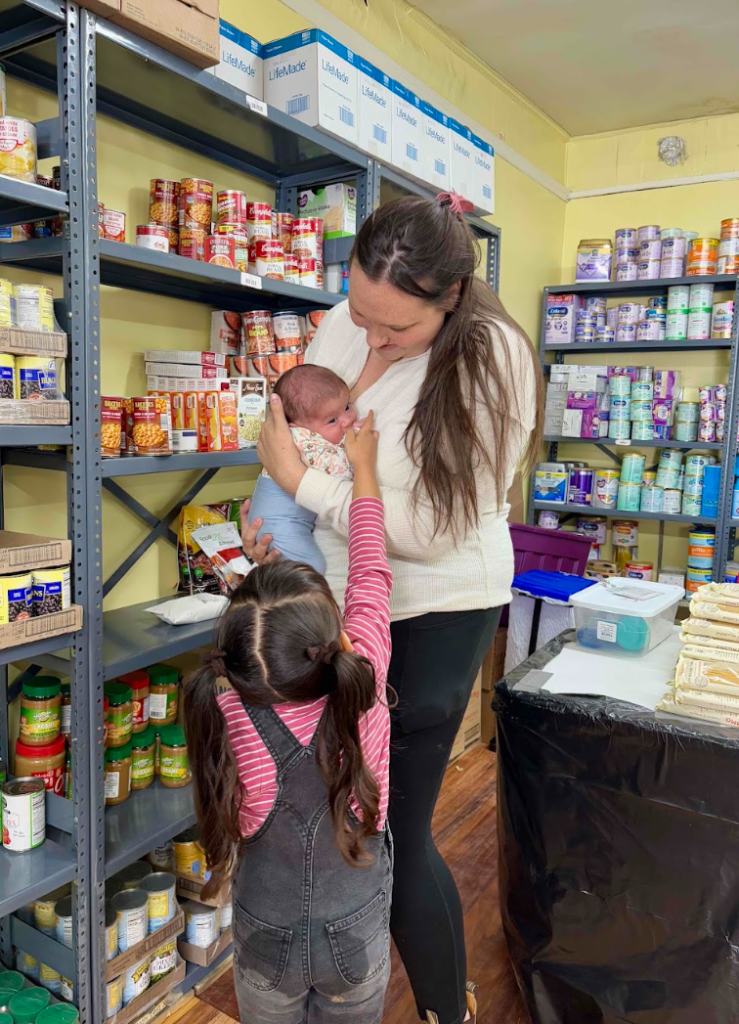
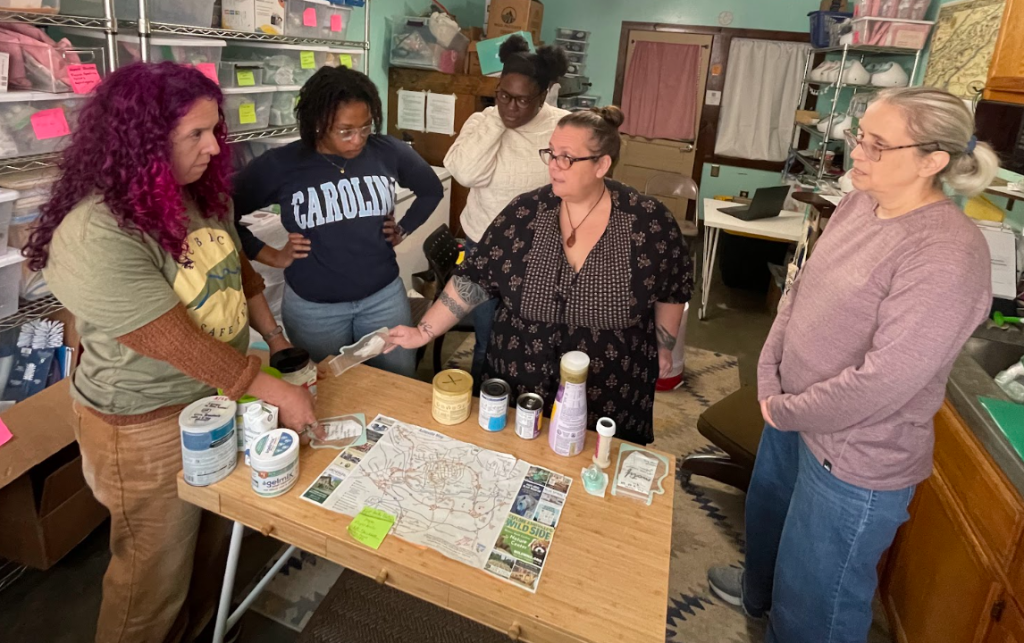
The study cites reports from volunteers who supported infant feeding after Hurricane Helene — the same response many of us lived through in the fall of 2024 — documenting widespread, indiscriminate formula distribution with little regard for infant safety or the potential to undermine breastfeeding. That experience is a large part of why the SAFE Team exists in its current form, and why our work looks the way it does: tabletop exercises with county partners, IYCF-E 101 trainings for responders, command center simulations with the New Hanover Disaster Coalition, presentations and trainings at conferences across the country, subject matter experts on national pediatric disaster committees, and steady policy advocacy to get infant feeding written into state and national emergency plans — not just pamphlets.
Every recommendation in this paper — integrate IYCF-E into Emergency Operations Plans, train responders, designate lead agencies, bring WIC into emergency management, build donation management protocols — is work this team is already advocating for at the state and local level. What we have now is peer-reviewed evidence, in one of the field’s leading journals, that this work is not a niche concern. It is a documented national gap.
So happy to have this to include in future lectures!!!
— Ashley Mickelson, SAFE Team
We are grateful to have further documentation of the current IYCF-E gap in our nation to continue to support our evidence-based trainings, lectures and presentations.
Pewitt, K.J., Muwahidah, A., Tu, B., Ling, C., & Tomori, C. (2026). Emergency planning and guidance for infant and young child feeding in emergencies (IYCF-E): Analysis of U.S. state policy in relation to global standards. International Journal of Disaster Risk Reduction, 143, 106323. Open access.
The SAFE Infant Feeding Team works to ensure that infant and young child feeding is built into emergency preparedness and response — before disaster strikes. To bring an IYCF-E training or tabletop exercise to your community, reach out through the contact form.